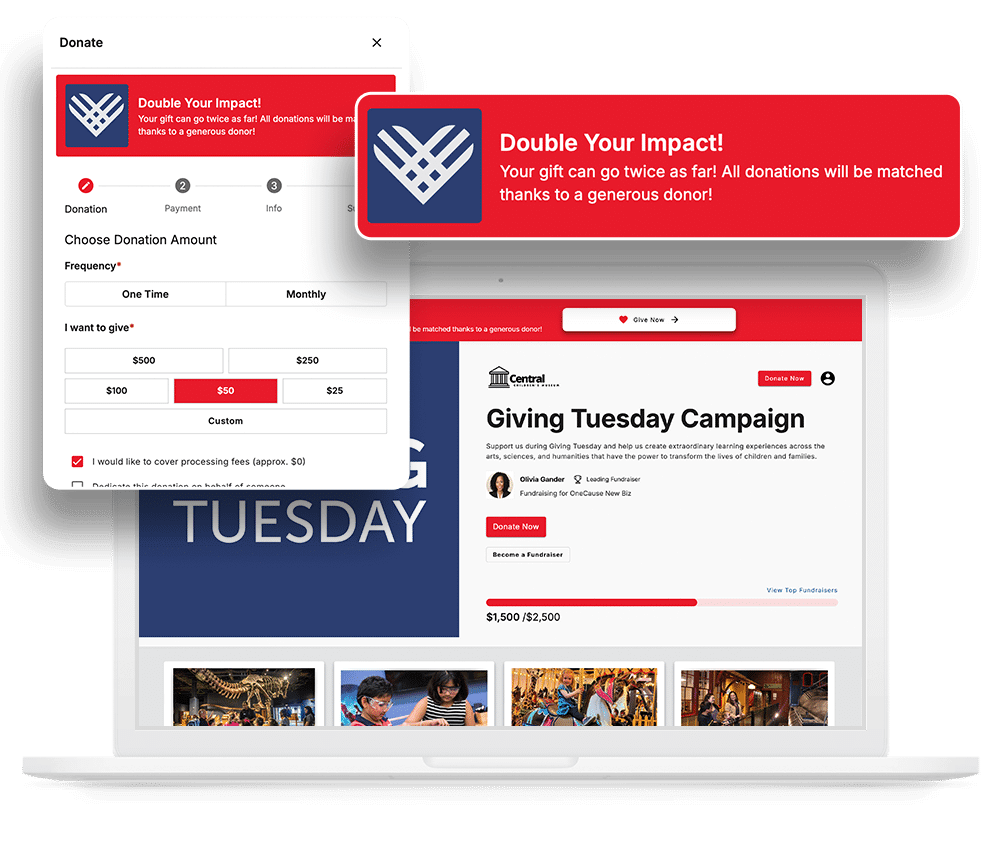
After making these improvements, brainstorm other ways your donation page could provide a better experience. For example, you might add a short “More Ways to Give” section with links to educational pages about planned giving, in-kind donations, and other options your donors may be interested in.
2. Enable Personal Fundraising Pages
Your organization has plenty of passionate supporters who want to do more than just donate. With the right online fundraising software, you can make it easy for these individuals to launch their own fundraising pages and quickly multiply their impact. Participants can raise money on your nonprofit’s behalf at any time.
How the process typically works:
- A supporter decides to launch a fundraiser on your organization’s behalf. They might do so as part of a larger peer-to-peer campaign or on their own, whether to celebrate a birthday or memorialize a loved one.
- Using the tools on your website, they create a personal fundraising page. Online fundraising software or a peer-to-peer platform will enable supporters to quickly launch an individual fundraising page with your organization’s branding and a built-in donation form.
- The participant personalizes their fundraising page. The supporter intuitively adds personal details to the page, such as a paragraph about why they’re fundraising, their photo, and a personal donation goal.
- They share the fundraiser, and your nonprofit receives funds! Once set up, participants send the link to their fundraising page to friends, family, and peers. They collect donations and spread awareness of your cause to new audiences.
While these fundraisers are supporter-driven, your nonprofit still plays a role in their success. Provide tips and resources to fundraising participants and answer any questions they have. Support their efforts by sharing branded marketing materials, appeal templates, and basic guidelines for fundraising.
3. Host More Engaging Online Events
Your online giving strategy should include more than just optimized fundraising pages. Take a balanced approach to fundraising by including events in your plans, too. These could be fully virtual events or hybrid events with an optional in-person portion. Either way, offer several fun opportunities for your supporters to connect with each other and your nonprofit online.
Make sure your events are highly interactive to encourage engagement. Don’t just post a livestream—give guests multiple immersive ways to participate in online activities. For example, you might host an auction where guests can bid from anywhere and start fast-paced bidding wars. Or, plan a webinar with real-time discussions and interactive Q&A sections.
To create genuinely engaging online events, you’ll likely need event software. A good event fundraising platform will have a variety of features to help you improve the guest experience, such as:
- Streamlined registration and ticketing
- Online check-in and check-out
- Livestreaming and live chat
- Gamification features like leaderboards and fundraising thermometers
- Real-time mobile and online bidding with notifications
- AI-powered donor personalization
To access some of these features, you may need specialized tools like auction software. However, many solutions offer all of the above features and more, including tools to streamline in-person event management.
As you adjust your strategy, analyze giving data and engagement metrics like conversion and click-through rates. Compare the results of past and present online campaigns to understand your success and identify ways to improve further. If you make further changes to core elements of your strategy like your donation page, use A/B testing to determine which tweaks will make the most impact. With the right upgrades, you’ll boost your online fundraising revenue in no time.